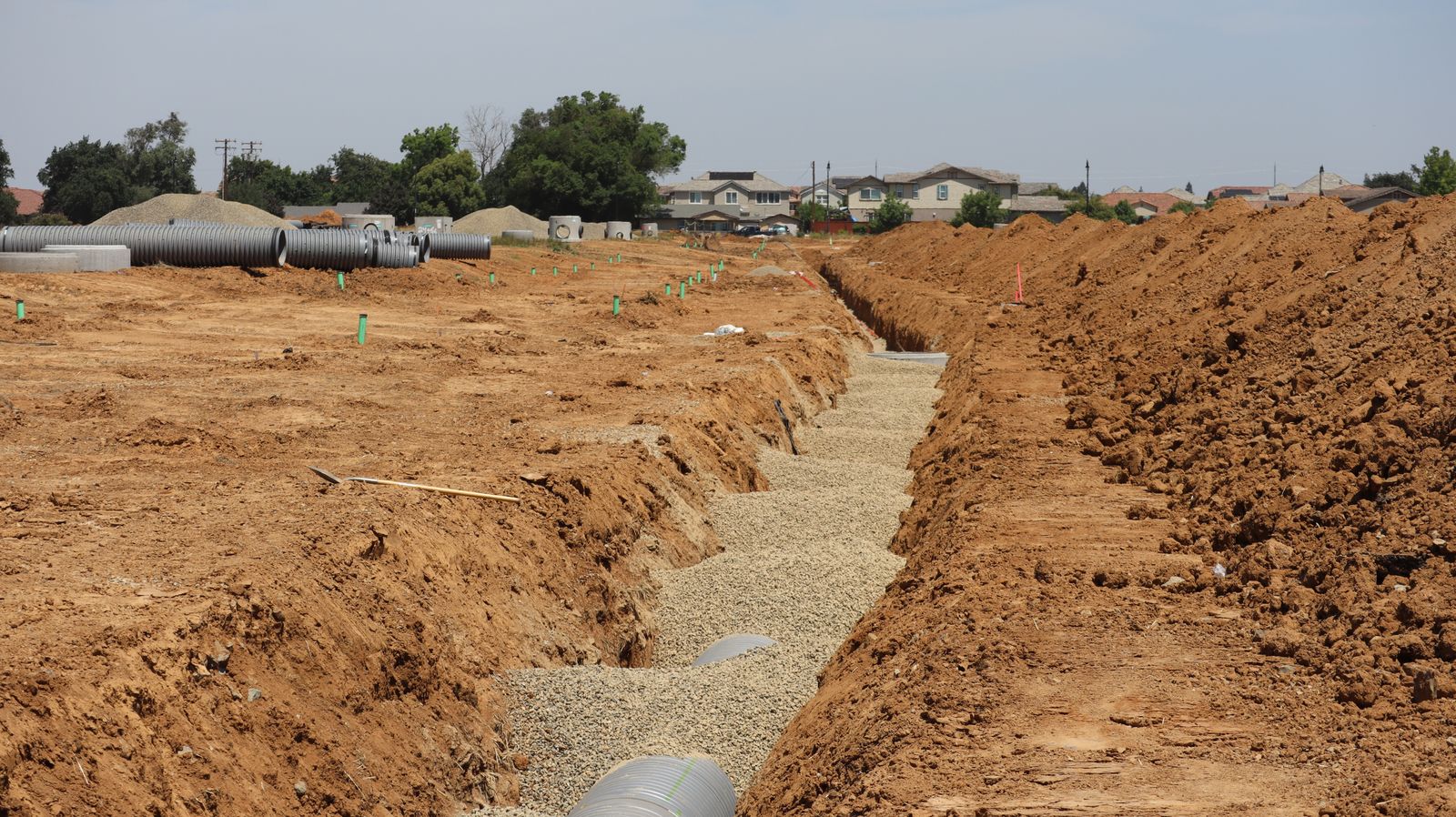
Trenchless sewer repair in Tucker means replacing or relining a damaged sewer lateral through small pits instead of digging up the whole yard. It is not right for every line, and the only way to know is a camera look inside the pipe. Calls are answered 24/7, and the pro explains the options and the upfront price before any work begins.
If your yard has a driveway, a patio or a mature oak sitting right over the sewer path, trenchless methods can be appealing. A short trench at each end of the line can replace what would otherwise be a long open cut. The catch is that the old pipe has to suit the method, and that is something the surface cannot tell anyone.
Trenchless sewer repair in Tucker: what "trenchless" means for a lateral
The sewer lateral is the pipe that runs from your house to the public main. Open-trench work exposes that pipe along its full length so it can be lifted out and replaced. Trenchless sewer repair keeps the earth above the pipe mostly in place and works from the ends, using an access pit, a sewer cleanout or another existing opening.
Two methods cover most trenchless work. One builds a new pipe inside the old one. The other pulls a new pipe through the old path while the old one breaks apart around it. Both start the same way, by clearing the line and recording its condition on video.
Sewer pipe lining vs pipe bursting sewer line work, in plain language
Sewer pipe lining, usually called cured-in-place lining, pushes a resin-soaked liner into the old pipe and hardens it in place. The result is a pipe within a pipe, with no joints along its length. The old pipe stays where it is and acts as a host.
Pipe bursting a sewer line does the opposite. A bursting head is pulled through the old pipe, cracking it outward into the soil, while a new pipe of equal or larger size follows right behind. Because the new pipe is not tied to the shape of the old one, bursting can be an option when the host pipe is too damaged to line.
| Pipe lining | Pipe bursting | Open trench | |
|---|---|---|---|
| How it works | New pipe formed inside the old pipe | New pipe pulled in as the old pipe is broken | Old pipe dug out and replaced along its length |
| Digging needed | Small access points | Pits at both ends | The whole run is opened |
| Follows the old path | Yes, including its sags | Mostly, but not tied to the old shape | Can be re-graded to fix a sag |
| Often considered when | Cracks, open joints or roots at joints, with the pipe still in line | Pipe is badly broken but the path is clear | Collapse, a deep sag or tight bends |
That table is a general guide, not a verdict on any one line. The pro decides after seeing the video.
Describe what you have seen and a local pro will explain the next step.
When trenchless is a good fit, and when it is not
A line is often a good candidate when the pipe is still in a fairly straight, continuous run and the damage is cracks, open joints or roots entering at the joints. Lining can seal those, and bursting can swap the pipe out entirely.
It is a poor fit in several situations. A collapsed section can block a liner from passing through. A sag, sometimes called a belly, holds water, and a liner will follow the dip rather than correct it. Tight bends can stop a bursting head or a liner.
And a line that runs very close to a gas, water or other buried utility may call for a hand-dug approach instead.
No honest pro promises that trenchless always works, or that it is always the better choice than digging. When a trench is the right answer, you will hear that on the phone and see why on the video.
Access points: cleanouts and small pits
Trenchless does not mean no digging. It means the digging is limited to the places where tools need to enter and exit. A cleanout is one of the easiest access points because the opening already exists. Many older homes do not have one, which is why sewer cleanout installation often comes up as part of the same visit.
Where there is no usable opening, a pit is dug at the house end and another where the lateral meets the main or the property line. The size of those pits depends on the pipe depth and the method, and the pro walks the yard with you to mark where they would go before anything is dug. Backfilling and restoring the surface follow the pit work.

No dig sewer repair on Tucker lots: driveways, trees and hardscape
No dig sewer repair appeals to Tucker homeowners for good reasons. A sewer line often runs beneath a driveway, a front walk or the roots of a large oak. Cutting through any of those adds work and disruption to the repair itself. Working from small pits can leave most of that surface alone.
It still has to be weighed against what the camera shows. If tree roots in the sewer line have pushed the pipe out of line, or the pipe has settled, the plan may change. Our guide to tree roots in sewer line problems explains how roots interact with older joints, and why cutting them out is often the first step before any lining.
A local pro can walk the line with you and mark where any pits would go.
What the camera has to show before anyone recommends lining
A recommendation to line or burst a pipe should come after a camera inspection, never before. A sewer camera inspection lets everyone see the pipe diameter, the material, the location of cracks and offsets, any sags and whether the line is still continuous end to end. It also confirms where the line turns and how far each run is.
Before a liner goes in, the line is cleared of roots and debris so the liner can seat properly. After the work, a second camera run can confirm the result. If you are also dealing with sewage coming up a drain, start with the sewer backup page and call, because that situation needs attention first.
Trenchless sewer repair on Tucker homes
Most Tucker subdivisions were built in the 1960s and 1970s, and many of those homes have clay or cast iron laterals, with some Orangeburg and newer PVC on infill lots. Joints on older clay and iron pipe are common places for roots to enter, which is exactly the kind of damage lining is designed to address. Cast iron and Orangeburg can behave differently, so the video matters more than the age of the house.
In the older streets around Main Street, the pro may find several generations of pipe along one run, and the page on sewer problems in Downtown Tucker describes what that looks like. On the east side, many Smoke Rise lots are an acre or more with a long run and big trees, which is where limited digging can be most welcome, as covered under sewer problems in Smoke Rise. Red clay soil also matters, because it holds its shape well around a pit once the work is done.
While you wait for the pro
Trenchless sewer repair questions Tucker homeowners ask
No. A collapsed section, a deep sag or a very tight bend can rule it out, and so can a run that sits close to another buried utility. The camera shows which situation you have, and the pro will tell you if a trench is the better route.
Not automatically. It can reduce the amount of yard and hardscape that gets disturbed, but it has to suit the pipe. When it does not, open-trench work is the sound answer.
They depend on the method, the depth of the pipe and where the line connects. The pro marks the likely locations with you before digging so you know what to expect in the yard.
A liner is designed to seal joints, which is where roots usually get in. No repair is a promise about the future, though, so ask the pro how roots near your line would be handled.
Generally not. A liner follows the shape of the host pipe, so a dip stays a dip. If the camera shows a belly that holds water, the pro may suggest pipe bursting or a trench with re-grading.
It depends on the length of the line, the condition of the pipe and the method. The pro gives you an idea of the schedule after the camera inspection, not before it.
That depends on the method and the materials, so ask before work starts. The pro can tell you when it is fine to run water again and when to wait.
Rules differ from one place to another and depend on the work involved. Raise it with the pro, who can tell you what applies to your address, and your city or sewer provider can confirm it.